
Rosemary for Scalp Health: An Old Herb for Restless Roots
My first real introduction to rosemary had nothing to do with hair. It was a plate of roasted potatoes, the kind with crisped edges and a smell so specific I had to ask what was in it. Woody, faintly bitter, a little like pine needles warmed in the sun. I did not expect, years later, to find that same herb showing up in old beauty recipes.
That is how I learned about rosemary for scalp health, not through a wellness article but through a story. Rosemary steeped in alcohol was once known as Queen of Hungary Water, a beauty tonic legend traces back to the fourteenth century. As the story goes, an aging queen used it daily on her skin and hair and, not long after, received a marriage proposal from a much younger prince. Whether or not that detail is true, rosemary's reputation as a beauty ingredient is old enough to outlast most trends.
Why Do People Turn to Rosemary for Scalp Health?
Queen of Hungary Water is just one chapter in a much longer story. Mediterranean households simmered rosemary into rinses long before anyone called it an "ingredient." European herbalists recommended it for a tired scalp. What the old recipes attributed to charm, modern research attributes in part to chemistry: the plant is rich in rosmarinic acid and carnosic acid, two compounds known for their antioxidant properties, which may help protect the scalp from the kind of everyday oxidative stress that comes from sun, pollution, and simply living in a body that ages.
There is also a warming, stimulating quality to rosemary. Herbalists have long associated it with circulation, the idea being that a scalp with steady blood flow is a scalp better equipped to support what grows from it. A small clinical study from 2015 found that rosemary oil performed comparably to a leading topical treatment for thinning hair over six months, though the research is limited and rosemary should not be mistaken for a guaranteed fix. What it offers, more honestly, is support. A small, plant-based act of care repeated often enough to matter.
Rosemary Oil or Rosemary Water: What Is the Difference?
People often ask whether they should reach for rosemary oil or rosemary water, and the answer depends on what your scalp is asking for.
Rosemary oil is concentrated. A few drops, warmed between the palms and massaged into the scalp, can feel grounding, almost ceremonial. It is best diluted in a carrier oil rather than used directly on the skin, and it pairs naturally with the kind of slow, unhurried scalp massage that doubles as a moment of stillness in an otherwise busy day.
Rosemary water is gentler and easier to fold into a daily ritual. Steep fresh or dried rosemary in hot water, let it cool, strain it, and pour it over the scalp after washing as a final rinse. It will not replace a cleanser, but it can leave the hair smelling faintly herbal and the scalp feeling refreshed, especially in warmer months when the scalp tends to feel heavier and less alive.
Neither is a cure. Both are companions to a ritual that is already, hopefully, treating the scalp with some tenderness.
If you want a simple place to start, try this: after washing, section the hair and spend two or three minutes massaging diluted rosemary oil into the scalp with your fingertips, working in slow circles from the hairline back. Or keep a jar of cooled rosemary water in the shower and use it as your final rinse, two or three times a week. Consistency matters more than intensity here. A scalp responds to rhythm, not to a single dramatic effort.
How Rosemary Finds Its Way Into the Dolgio Ritual
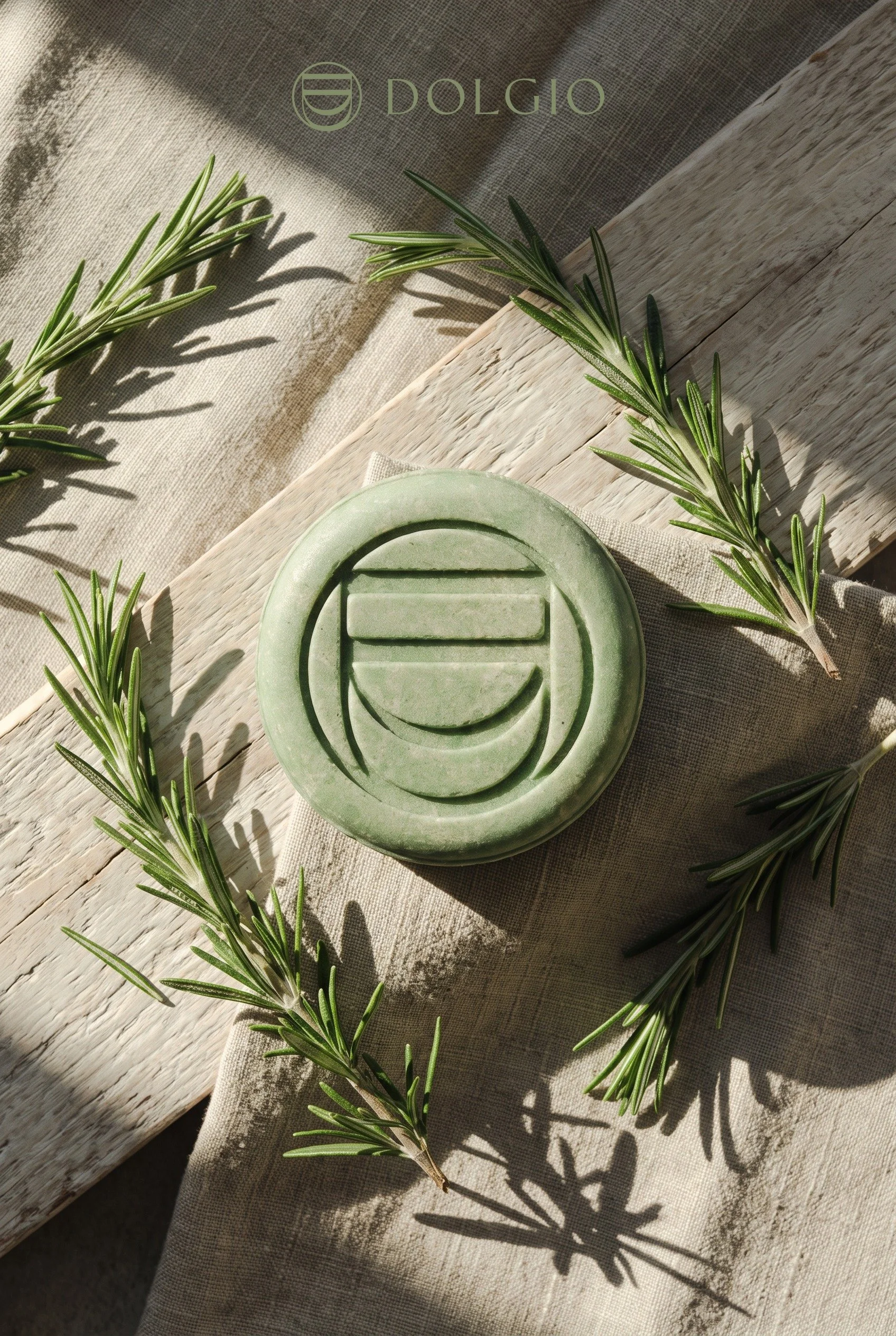
At Dolgio, rosemary sits alongside wild nettle and French green clay in our shampoo bar, each ingredient doing its own quiet work. Nettle is what nomads reach out for, the herb that grows stubbornly along riverbanks and strengthens hair from the root. Rosemary joins it as a newer friend, offering that same sense of scalp awakening, that same invitation to notice how the scalp feels rather than rushing past it. French green clay rounds out the bar by gently absorbing excess oil, giving the lather a light, mineral texture without stripping the hair of what it needs.
Used together, they turn a wash into something closer to a pause. You can find the Nettle and Rosemary Shampoo Bar if you would like to bring this particular combination into your own routine, though the plant itself, in whatever form you meet it, is worth getting to know.
A Ritual, Not a Routine
Scalp health rarely comes from a single ingredient. It comes from attention paid regularly. A few minutes of massage. A rinse that smells like something growing. The willingness to slow down at the sink instead of rushing through it.
Rosemary will not undo years of neglect in a week. But it asks for so little and gives back a kind of steadiness, a scent that clears the head, a scalp that feels tended to rather than ignored. That, more than any single compound, may be its real gift.
If you enjoyed this, you might also like our post on nettle for hair growth for a closer look at the other herb we return to again and again.
With warmth,
Oyumaa