
Why Your Scalp Has a Microbiome (And Why Stripping Shampoo Disrupts It)
Growing up in Mongolia, I never once heard anyone use the word microbiome. But everyone around me understood that a scalp scrubbed too hard, too often, with something too strong, stopped behaving the way it should. Hair went from soft to brittle, then oily again within a day, no matter what you did to it. People called it an unhappy scalp. Science now has a name for what they were watching happen, and it is called the scalp microbiome.
Your scalp microbiome is a living layer of bacteria and other microorganisms that lives on the skin the same way a microbiome lives in your gut. Researchers studying this layer consistently find the same core residents: mostly Staphylococcus, along with Cutibacterium and Lawsonella, all quietly doing the work of keeping your scalp in balance. When that layer is disrupted, hair and scalp health tend to follow close behind.
What Does the Scalp Microbiome Actually Do?
Think of the scalp microbiome as a small, established neighborhood. Each resident species keeps the others in check, competing for the same space and resources so no single organism takes over.
One of the organisms kept in check is Malassezia, a yeast that lives on every scalp in small amounts and is linked to flaking and irritation when it grows unchecked. A balanced microbiome does not eliminate Malassezia. It simply keeps it from taking more room than it should.
Sebum, the natural oil your scalp produces, feeds this ecosystem. It is not something to strip away entirely. It is closer to soil, the medium the whole system depends on.
This is different from how most of us were taught to think about oil. We learn early that oily hair is a problem to solve, something to wash away as often as it returns. But a scalp microbiome does not think in terms of clean and dirty. It thinks in terms of balance, and balance needs something to work with.
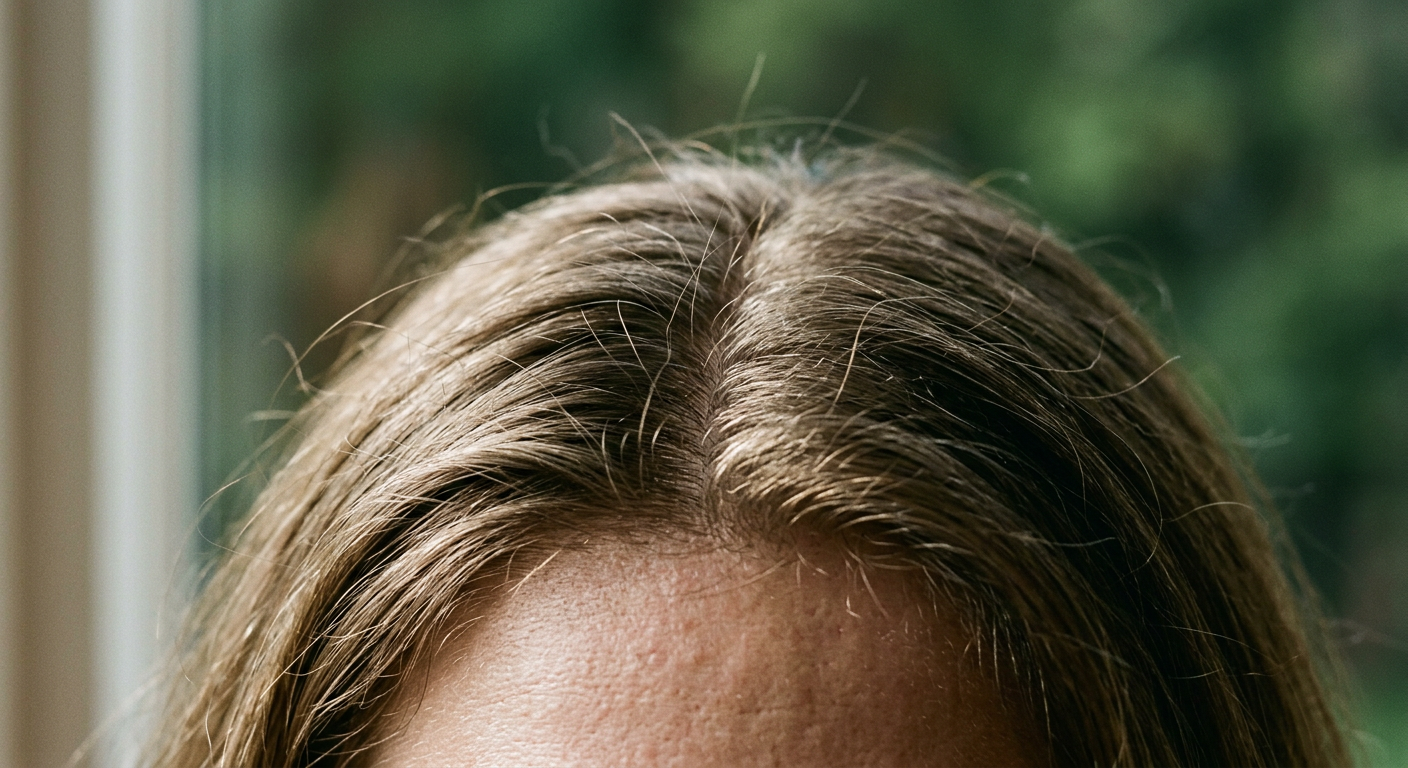
Why Stripping Shampoo Disrupts It
Most conventional shampoos rely on sulfates, detergents strong enough to remove oil, product buildup, and dirt in a single wash. Research on scalp microbiota has found that harsh, high-sulfate formulas can strip away this protective layer of sebum along with the healthy microbes living in it, lowering microbial diversity in the process.
When the neighborhood loses its established residents, opportunists move in faster than balance can return. This is part of why so many people find themselves stuck in a cycle of oily roots and dry ends, washing more often to manage a problem the washing itself keeps recreating.
Your scalp is not broken in this cycle. It is reacting exactly as any disrupted ecosystem would, overproducing oil to compensate for what keeps getting stripped away.
Signs Your Scalp Microbiome Might Be Out of Balance
A scalp that feels tight or itchy within a day of washing is often a sign of this cycle, not a sign you need a stronger shampoo. Flaking that comes and goes without an obvious cause can point the same direction. So can hair that seems to need washing more frequently than it used to, even though nothing else about your routine has changed.
None of these signs mean something has gone wrong with you. They usually mean the scalp is compensating for a system that keeps getting reset before it can settle.
How Dolgio Approaches This Differently
Our Nettle & Rosemary Shampoo Bar is built without high-sulfate detergents. Wild nettle cleanses gently while still lifting real dirt and buildup, so the wash does its job without treating your scalp's ecosystem as something to erase and start over.
Rosemary works alongside it, clearing the scalp and encouraging circulation without disturbing the balance nettle is working to protect. A small amount of French green clay rounds out the formula, absorbing excess oil gently rather than pulling everything away at once. Together, they are formulated to cleanse the way unhurried river washing always did, thoroughly, but without stripping the scalp bare.
This is not a promise that a bar alone rebalances anything overnight. Microbiomes are patient systems. But choosing a gentler formula is choosing not to work against your scalp's own effort to stay in balance. If you are curious, the Dolgio shampoo bar is where we put this thinking into practice.
Caring for an Ecosystem, Not Just a Surface
There is a shift happening in how people think about hair care, treating the scalp less like a surface to be scrubbed clean and more like skin, with its own needs and its own quiet intelligence. I think this shift is really a return. Nomadic hair care never separated the scalp from the rest of the body's balance. It was always one system, tended gently, rarely rushed.
If your hair has felt caught in a cycle no product seems to fix, the scalp underneath it may simply be asking for less interference, not more product layered on top. Sometimes care means adding something. More often, it means choosing something that does not take so much away.
If this resonated with you, you might also enjoy Shampoo Bar Waxy Hair Transition: What It Means and Why It Passes, on what those first few washes are really doing.
With warmth, Oyumaa