
Nettle for Hair Growth: What Nomadic Women Observed, and What Science Just Explained
There is a plant that grows along riverbanks on the Mongolian steppe. It stings if you brush against it carelessly. Nomadic women gathered it anyway.
They were not reckless. They were precise. They understood something that took modern science considerably longer to prove: that the health of your hair begins underground, in the scalp, at the follicle, long before a strand ever sees daylight. Wild nettle, bitter and mineral-rich, was a root-cause solution. Not a coating. Not a shine treatment. A correction at the source.
This is the story of nettle for hair growth, and why it may be the most honest ingredient in your hair care ritual.
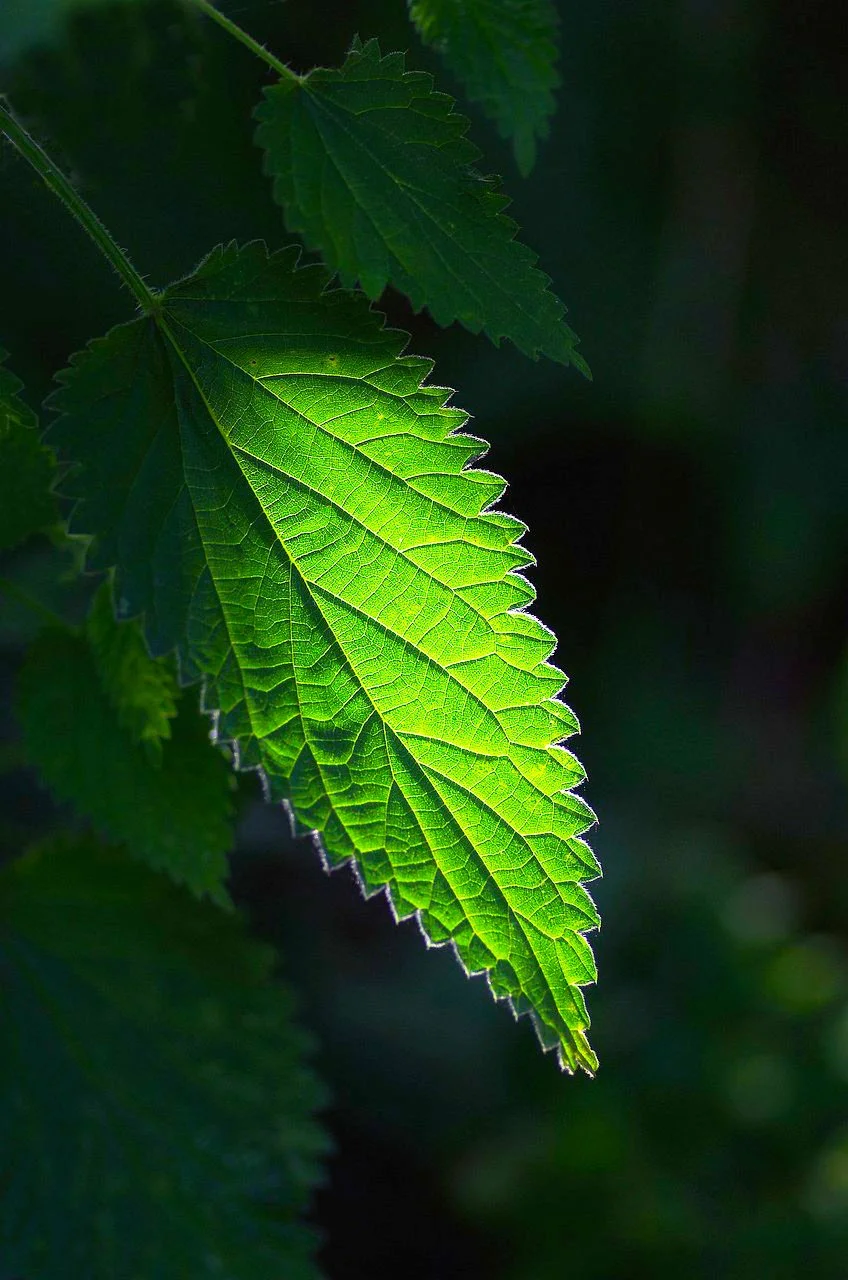
Stinging Nettle
Why Hair Loss Begins at the Scalp, Not the Strand
Most people treat their hair the way you might repaint a wall without fixing the damp underneath. Products coat the surface, smooth the cuticle, restore temporary shine. The strand looks better. The follicle continues to weaken.
Hair loss and thinning are almost always a scalp story. Specifically, they are often a story about a hormone called dihydrotestosterone, or DHT. DHT is produced when testosterone is converted by an enzyme called 5-alpha reductase. At elevated levels, DHT binds to follicle receptors, gradually shrinking them until the hair they produce becomes finer, shorter, and eventually stops growing altogether.
This is the mechanism behind androgenetic alopecia, the most common form of hair thinning in both men and women. And it is the reason that the most effective hair growth interventions have always worked at the scalp, not at the strand.
Nettle addresses exactly this.
What Nettle Actually Does for Your Follicles
Stinging nettle (Urtica dioica) contains phytochemicals that may help inhibit 5-alpha reductase, the enzyme responsible for DHT production. A 2025 computational study published in Frontiers in Bioinformatics (Hasannejad-Asl et al., PMC12089051) identified six phytochemicals in Urtica dioica with strong binding affinity to this enzyme, offering a clearer picture of the mechanism traditional herbalists had long observed in practice.
Beyond DHT, nettle delivers directly to the follicular environment: iron, silica, vitamins A and C, and antioxidants that support cell proliferation at the root level. A six-month clinical study of 120 people experiencing androgenetic alopecia and telogen effluvium found that participants using a nettle extract-based shampoo and serum saw a 90% reduction in hair loss, compared to 40% in the placebo group. (Hair Growth Promoting Effect of Urtica dioica L., Central Asian Journal of Medical Sciences, 2018)
That is not a cosmetic outcome. That is follicular support.
It is worth saying clearly: no single ingredient is a cure, and large-scale clinical trials specifically isolating nettle are still limited. What the research confirms is a plausible and promising mechanism. What centuries of traditional use confirm is that people who lived close to the land noticed the same thing.
The Steppe Already Knew This
Nettle grows natively across the Eurasian steppe, throughout Mongolia and Siberia, along the rivers and valley floors where nomadic camps settled seasonally. Its use in Central Asian herbal medicine is long-standing, though precise ethnobotanical records of scalp-specific application in Mongolian nomadic practice are sparse. What the 2018 Central Asian Journal of Medical Sciences study confirms is that researchers in the region were already working from a plant whose traditional medicinal use predated the trial.
This is not folklore dressed up as science. It is science arriving at what observation recorded long ago.
Nomadic life demanded efficiency. There was no excess, no waste, no room for treatments that only worked on the surface. When something was used generation after generation, it was because it worked at the level that mattered. Nettle survived in the Mongolian hair care tradition because it addressed the root. Literally.
Pairing Nettle with Rosemary: Why These Two Work Together
Nettle does not work alone in Dolgio's formula. It is paired with rosemary extract, and the pairing is not incidental.
A 2015 randomized clinical trial published in Skinmed (Panahi et al., PMID: 25842469) compared rosemary oil to minoxidil 2% over six months in 100 people with androgenetic alopecia. Both groups showed comparable increases in hair count. The rosemary group reported significantly less scalp itching.
Rosemary works by improving microcirculation in the scalp, delivering more oxygen and nutrients to the follicle. Nettle works by addressing the hormonal environment that shrinks follicles in the first place. Together, they approach scalp health from two angles simultaneously: better blood flow to feed the follicle, and a more favorable hormonal environment for it to thrive in.
This is the root-cause logic at the center of Dolgio's formula. Not one ingredient doing one thing. Two ingredients working upstream of the problem.
How to Make Nettle Part of Your Ritual
The most effective way to deliver nettle to the scalp is through consistent, direct application. Dolgio's Nettle and Rosemary Shampoo Bar is formulated with both nettle and rosemary extracts as active ingredients, carried in a mild syndet base that cleanses without stripping the scalp barrier.
Because it is a syndet bar (not a soap bar), there is no alkaline residue that can disrupt scalp pH or leave the waxy buildup that some people experience when switching bar formats. The lather is gentle. The scalp receives the botanical benefit without a period of disruption.
Massage it in slowly. Let your fingertips work in small circles at the scalp. This is not simply cleansing. It is remembering that the care happening at the root is the care that will show up, weeks from now, in the strand.
If you are curious about how rosemary works alongside nettle, or want to understand the broader scalp care ritual, you might enjoy reading why scalp health is the foundation of every hair goal.
The bar is here. Start at the scalp. Explore the Dolgio shampoo bar.
With warmth, Oyumaa