
Hair Loss After Stress: Why It Waits 2-3 Months After the Event
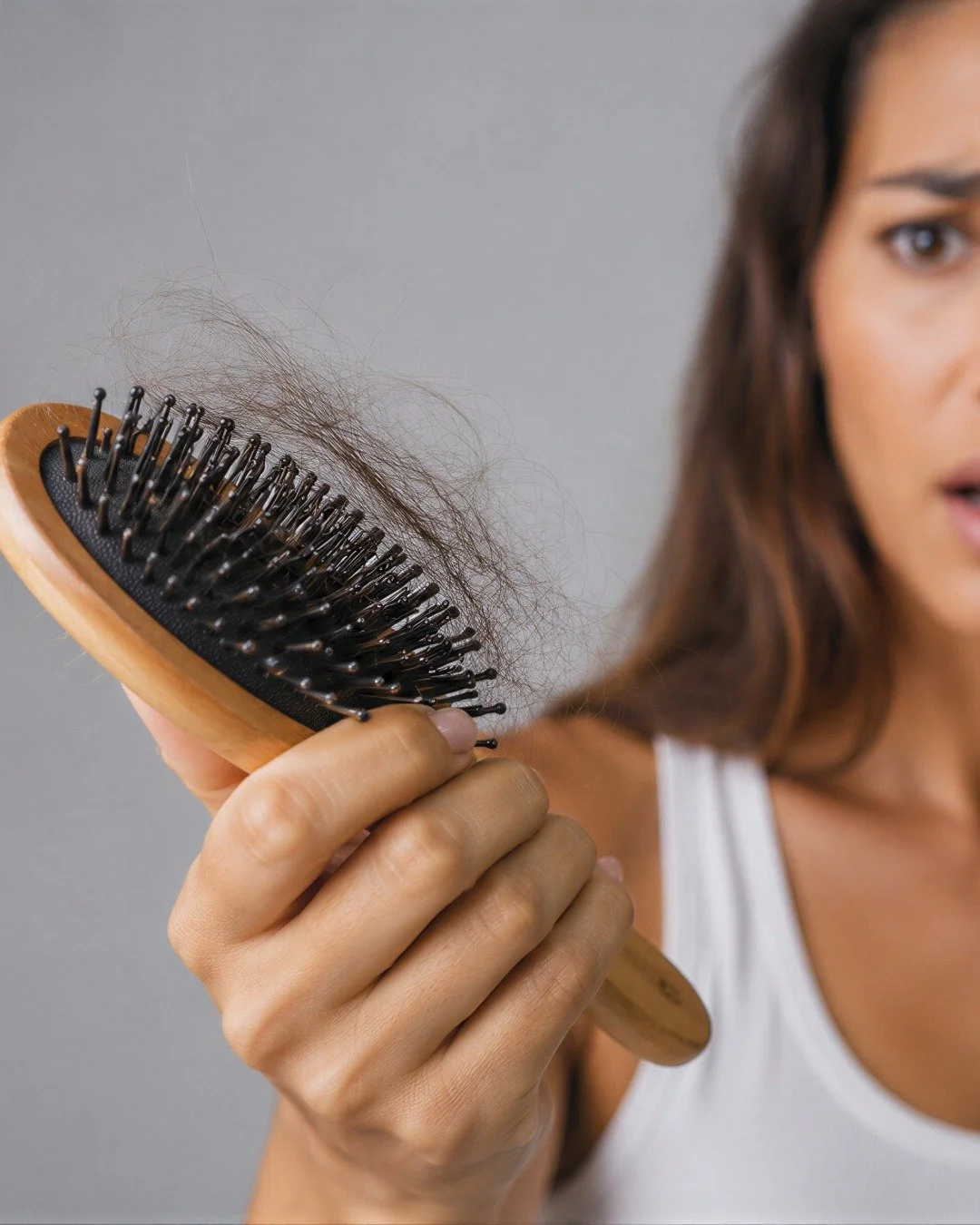
There is a particular kind of quiet that settles in after you get through something. The move is finished. The diagnosis has a plan attached to it now. The layoff is absorbed, the parent settled into the right kind of care. Hair loss after stress has a strange timing to it: it rarely shows up during the hard part. Weeks later, alone in the shower, you notice how much is left in your hands, and everyone around you had already said you made it. Your body was still catching up. Understanding that timing changes how you meet it.
Why Stress Hair Loss Shows Up Weeks Later, Not During the Crisis
The medical name for this is telogen effluvium, and the mechanism is almost absurdly delayed. A hair follicle under acute stress does not fall out immediately. Instead, a large number of follicles get pushed early into the resting phase of their cycle, telogen, where a hair sits dormant before it eventually releases. That process typically takes two to three months to complete.
So the shedding you notice in month three is not a new event. It is the echo of what your body was carrying back in month one, when you were too occupied surviving to notice your hair at all. This is part of why so many women feel blindsided. The hard season is technically over. The calendar has moved on. And yet the body is only now getting around to processing it.
There is nothing wrong with you for not noticing sooner. Survival mode narrows your attention on purpose. It has to. The body spends its resources on what keeps you upright, not on what keeps your hair full. The shedding is not a sign you are falling apart. It is a sign you already got through something, and your system is finally settling enough to show it.
The Season Nobody Prepares You For
We are fairly well equipped, culturally, to talk about the crisis itself. There are books for the divorce, playbooks for the layoff, support groups for the diagnosis. What gets almost no attention is the season directly after, when the adrenaline that carried you finally lets go.
This is the gap Dolgio was built to sit inside. Survival is not the destination. Getting through the hard thing is not the same as arriving somewhere. It is simply the end of one chapter, and the start of a quieter, less dramatic one that asks something different of you: not endurance, but attention.
For many women, this is the first time in months they have had the space to notice their own body again, and what they notice is not always what they hoped for. Thinner hair. A scalp that feels tight or reactive. A general sense of having spent something they cannot easily name. None of that means you did anything wrong. It means the hard part is finally behind you, and what is left is the work of tending to what it cost.
Tending the Scalp While You Tend Yourself
Scalp care in this season is less about correcting a problem and more about giving the follicle a calm environment to finish its cycle in. A clean, unirritated scalp will not stop telogen effluvium outright, the process is largely hormonal and follicular, but it does remove one more source of stress from a system that has already carried enough.
This is where Dolgio's Taiga Rain Shampoo Bar was built to help. Nettle cleanses without stripping the scalp, so it is not fighting the skin barrier on top of everything else it is managing. Rosemary supports the scalp environment that new growth depends on. French green clay, also in the formula, gently absorbs excess oil and gives the lather a light, mineral texture without pulling the scalp dry.
None of this is a promise to reverse hair loss after stress. That timeline belongs to your body, not to a shampoo bar. What it can offer is one less thing working against you while you wait it out: a small, repeatable ritual in a season that otherwise feels entirely out of your hands.
What Comes After Getting Through It
If you are in this season now, the shedding will slow. Most stress-related hair loss resolves within six to nine months once the follicle completes its cycle, though it can take longer for hair to feel fully restored to its former density. That is not a guess meant to comfort you. It is simply how the biology tends to move.
In the meantime, this is not a season to fix yourself in a hurry. You already did the hard part. What is left is quieter: choosing what you keep, what you let go of, what actually deserves your attention now that you have some back. That is not a consolation prize. That is the point.
Survival got you here. What you build next is yours to decide.
I think often about how much of what we carry through a hard season goes unspoken, and how strange it is that the body keeps its own record even after we think we have moved on. If your hair is telling you a story you were too busy to hear the first time, I hope this makes it a little less alarming, and a little more like information you can actually use.
With warmth,
Oyumaa